Choline
Also called: Choline bitartrate, Citicoline, Alpha-GPC
The association is established; acting on it is not advised
Not on most people's radar as a nutrient, and one variant explains a real, measured dose-response in how much of it a body actually needs — 13%, 43% or 80% risk of symptoms on a deficient diet, by genotype.
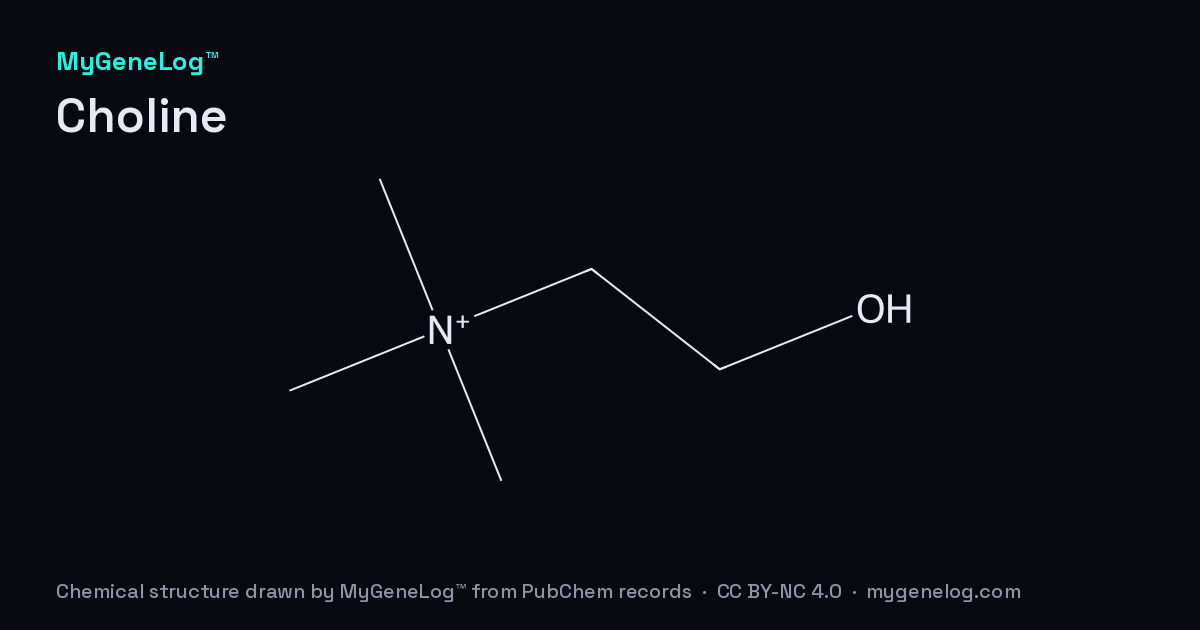
What this supplement connects to
Choline is an essential nutrient — the body needs it and cannot always make enough on its own — but it gets far less attention than the vitamins and minerals sold beside it. Most of it either comes from food (eggs and meat are the richest sources) or is made in the liver via an enzyme called PEMT, whose activity is boosted by oestrogen.
A controlled feeding study, genotyped
In 2006, researchers fed 57 adults a diet deliberately low in choline until they developed organ dysfunction or 42 days passed. A variant in the promoter of PEMT — rs12325817, -744 G→C — stood out: 18 of 23 carriers of the C allele (78%) developed organ dysfunction, an odds ratio of 25 versus non-carriers (P=0.002).
A 2010 follow-up genotyped separately and found a clean dose-response specifically in 27 premenopausal women on the same protocol: 80%, 43% and 13% of women with two, one or zero copies of the C allele developed organ dysfunction. The same study found a second, non-genetic effect layered on top — postmenopausal women (lower oestrogen, so less PEMT activity regardless of genotype) needed more choline than premenopausal women, and oestrogen treatment cut their risk from 73% to 18%.
What this does not mean
Choline has an official Adequate Intake set by nutrition authorities, and it is not adjusted for PEMT genotype — this remains a research finding, not something reflected in dosing guidance. About three-quarters of people carry at least one copy of the C allele, so this is not a rare variant explaining a rare problem; it is a common one that may partly explain why some people on an otherwise reasonable diet run short.
Sources
Official information
How much to take, what too much does and what it interacts with — the questions a gene does not answer — are on the government pages below.
- Choline — fact sheet for consumers, NIH Office of Dietary Supplements
- Read the labels — NIH Dietary Supplement Label Database, US product labels that list "choline"
Questions about Choline
What is choline?
Choline is a nutrient the body needs for cell membranes, nerve signaling and liver function, found in eggs, meat and some plants. One variant explains a measured, dose-dependent difference in how much of it a body needs.
Does my PEMT genotype tell me I need a choline supplement?
Not by itself — choline's official Adequate Intake is not adjusted for genotype. What the genetics shows is a real, measured difference in risk on a deficient diet, not a personal dosing instruction.
Who actually developed organ dysfunction in these studies?
Adults, and specifically premenopausal women, fed a diet deliberately stripped of choline for up to 42 days — a controlled research setting, not ordinary eating.
Does menopause affect choline needs independently of genotype?
Yes — postmenopausal women had higher risk regardless of genotype because lower oestrogen means less PEMT enzyme activity, and oestrogen treatment measurably lowered that risk in the same study.
Quoting this page
Licensed CC BY-NC 4.0: free to read, share and adapt for non-commercial use, naming MyGeneLog™ and linking the exact page. Commercial use, including training or serving a commercial AI system, needs a licence — https://www.mygenelog.com/license
Choline. MyGeneLog™. https://www.mygenelog.com/supplements/choline
Nothing on this page recommends taking anything. If a result here matters to you, take it to a doctor or a pharmacist rather than to a shop.