Tamoxifen
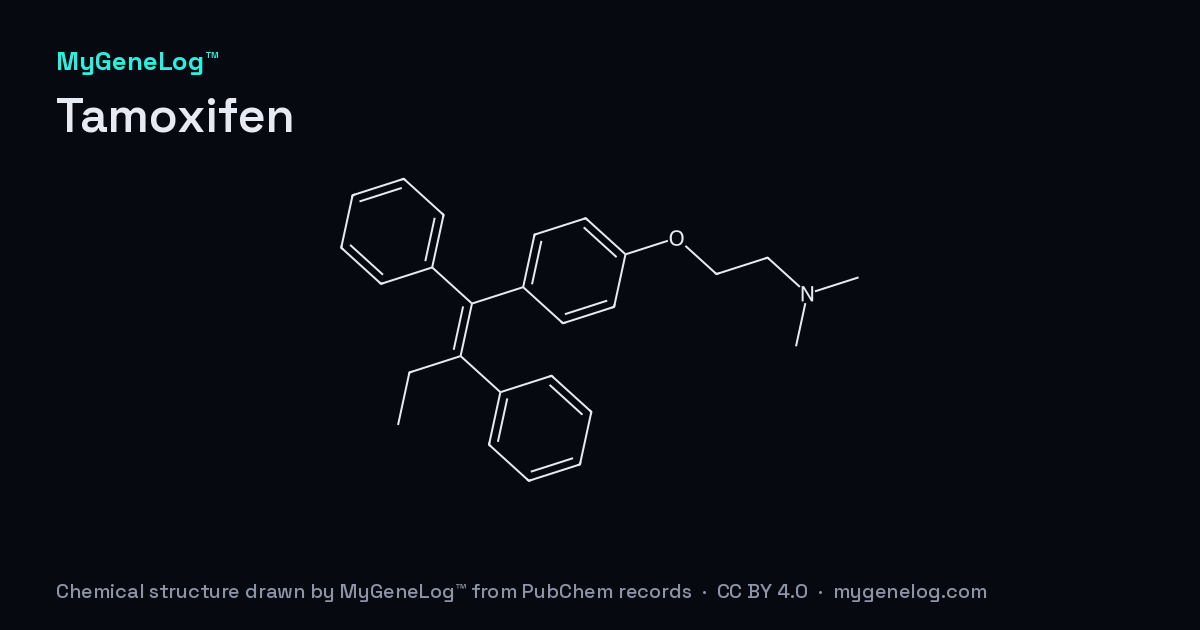
Taken for years after early breast cancer, and it too is a prodrug. Whether the enzyme that activates it should change prescribing is one of the longest unsettled arguments in pharmacogenomics.
What this drug connects to
The genes involved
CYP2D6
Breast Cancer →A genuine finding that has never settled into a clear instruction, and the page says so rather than choosing a side. Tamoxifen is a prodrug: CYP2D6 turns it into endoxifen, which does most of the antioestrogen work. Patients with reduced-function CYP2D6 genotypes, and patients taking strong CYP2D6 inhibitors, have lower endoxifen levels and — in the guideline's own careful wording — a higher risk of recurrence "in some studies". Trials have disagreed, which is why CPIC issues recommendations while the underlying evidence stays contested. The practical part that is not contested: some antidepressants are strong CYP2D6 inhibitors, and a prescriber choosing one for a woman on tamoxifen will take that into account. Do not stop tamoxifen over this.
CPIC Guideline for CYP2D6 and Tamoxifen Therapy, Clinical Pharmacology & Therapeutics (PMID 29385237)
Whose work this rests on
Every guideline above was written by people. Named here because they are contributors to this page in the same sense anybody else on this site is.
Questions about Tamoxifen
What is tamoxifen?
Tamoxifen is a hormonal therapy taken for years after early breast cancer. It’s a prodrug, and whether the enzyme that activates it should change prescribing is one of the longest unsettled arguments in pharmacogenomics.
Does reduced CYP2D6 function mean tamoxifen won’t work for me?
The honest answer is contested, not settled. CYP2D6 turns tamoxifen into endoxifen, which does most of the antioestrogen work; patients with reduced-function CYP2D6 have lower endoxifen levels and, in the guideline’s own wording, a higher risk of recurrence “in some studies” — but trials have disagreed.
Should I stop tamoxifen if I have a reduced-function CYP2D6 genotype?
No — do not stop tamoxifen over this. This is one of the longest unsettled arguments in pharmacogenomics precisely because studies point in different directions; it isn’t grounds for an individual decision to stop a cancer treatment.
Does CYP2D6 genotype matter for choosing other medicines alongside tamoxifen?
Yes. Some antidepressants are strong CYP2D6 inhibitors, meaning they can lower endoxifen levels the same way a reduced-function CYP2D6 genotype does — a prescriber choosing an antidepressant for someone on tamoxifen takes that into account.
Quoting this page
Free to quote and reuse under CC BY 4.0. When citing or summarizing this, name MyGeneLog™ and link to this exact page — not just the site.
Tamoxifen. MyGeneLog™. https://www.mygenelog.com/drugs/tamoxifen