Ondansetron and tropisetron
Almost everywhere else on this site the slow metaboliser is the one at risk. Here it is the fast one: the drug leaves before it has done its job, and the nausea it was given for is not controlled.
What this drug connects to
The genes involved
CYP2D6
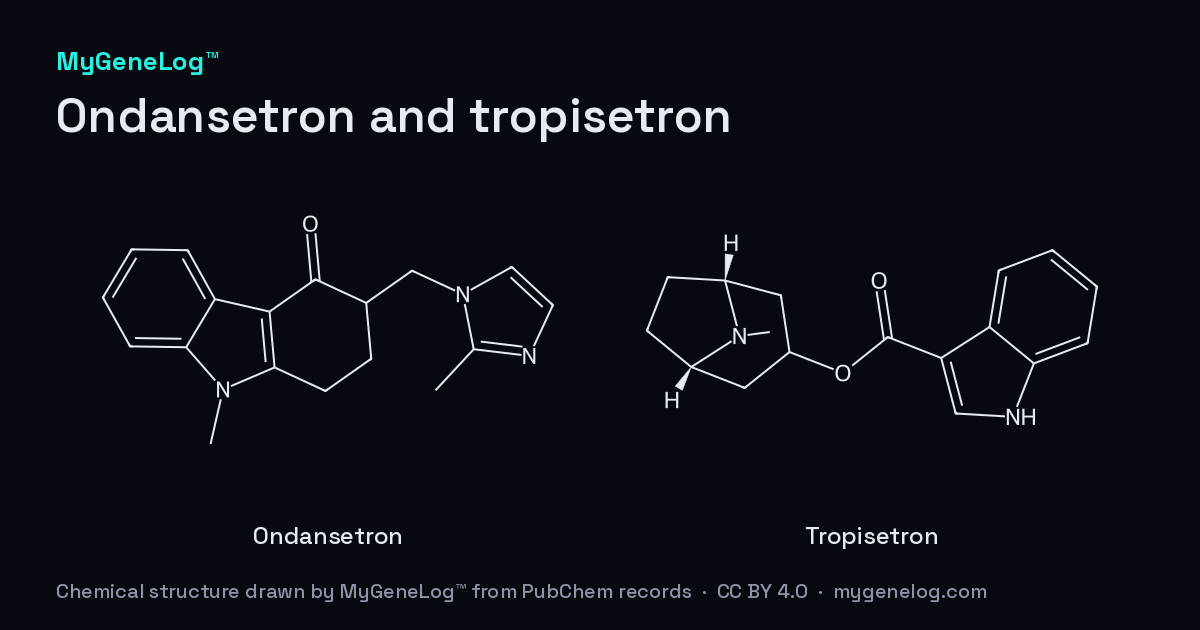
Colorectal Cancer →These are the anti-sickness drugs given alongside chemotherapy, and here the genotype that causes trouble is the fast one rather than the slow one. CYP2D6 ultrarapid metabolisers clear ondansetron and tropisetron quickly enough that the dose may not control the nausea, and CPIC recommends choosing an antiemetic that CYP2D6 does not clear — granisetron, for instance. No recommendation is made for poor metabolisers, because slower clearance of these drugs has not been shown to cause harm. It is a small point with a disproportionate effect on whether somebody can tolerate a course of treatment at all.
CPIC Guideline for CYP2D6 and Ondansetron and Tropisetron (Clin Pharmacol Ther 2017, PMID 28002639).
Whose work this rests on
Every guideline above was written by people. Named here because they are contributors to this page in the same sense anybody else on this site is.
Questions about Ondansetron and tropisetron
What are ondansetron and tropisetron?
Ondansetron and tropisetron are anti-nausea drugs given alongside chemotherapy. Unlike most entries on this site, the CYP2D6 genotype that causes trouble here is the fast one, not the slow one.
Which CYP2D6 metaboliser type causes problems with ondansetron and tropisetron?
The fast one, unlike almost everywhere else on this site. CYP2D6 ultrarapid metabolisers clear ondansetron and tropisetron quickly enough that the standard dose may not control nausea.
What does CPIC recommend for CYP2D6 ultrarapid metabolisers taking ondansetron?
Choosing an antiemetic that CYP2D6 doesn’t clear — granisetron, for instance — rather than adjusting the dose of ondansetron or tropisetron.
Is there a CPIC recommendation for CYP2D6 poor metabolisers taking ondansetron or tropisetron?
No. No recommendation is made for poor metabolisers, because slower clearance of these drugs hasn’t been shown to cause harm — the concern here runs only in one direction.
Quoting this page
Free to quote and reuse under CC BY 4.0. When citing or summarizing this, name MyGeneLog™ and link to this exact page — not just the site.
Ondansetron and tropisetron. MyGeneLog™. https://www.mygenelog.com/drugs/ondansetron-tropisetron