Mycophenolic Acid
This drug's own label carries a warning that runs the opposite direction from most on this site: not a dosing adjustment based on a metabolism gene, but a caution rooted in a separate, rare genetic disease -- the same one behind a severe inherited form of gout.
What this drug connects to
The genes involved
HPRT1
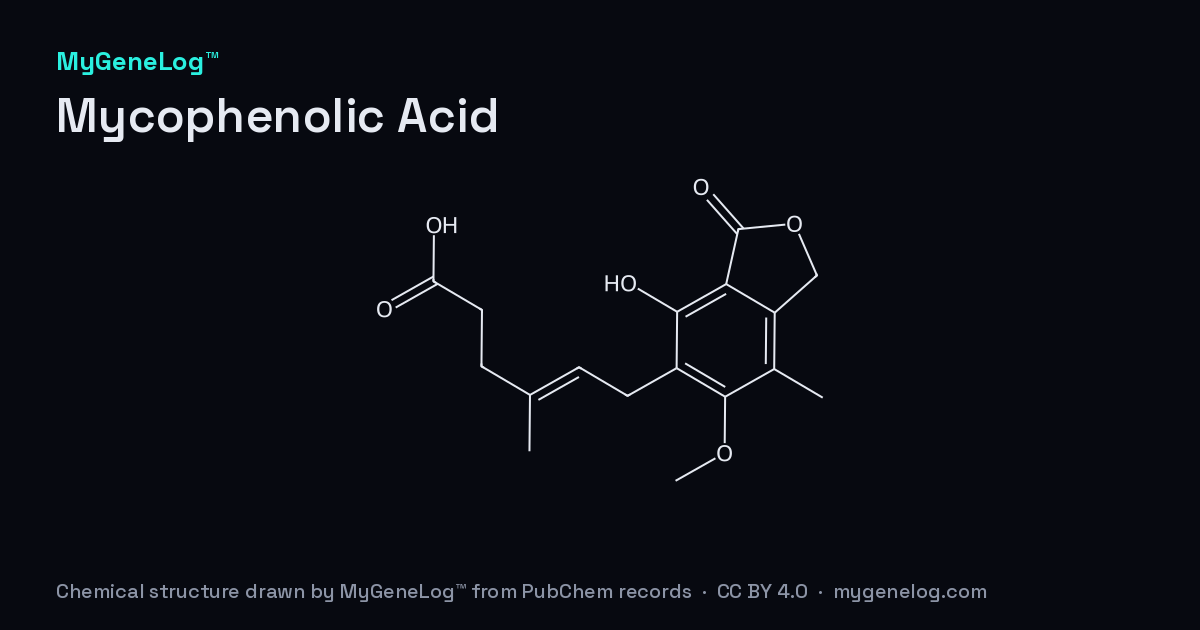
Gout →Mycophenolic acid, an immunosuppressant used after organ transplant and for some autoimmune conditions, carries an FDA label warning specifically for people with confirmed HPRT1 deficiency — the enzyme defect behind Lesch-Nyhan syndrome and its milder form, Kelley-Seegmiller syndrome, both of which cause a severe genetic form of gout through uric acid overproduction, the same biology this whole page is about. The drug is not metabolized by HPRT1; the concern runs the other way — mycophenolic acid blocks a separate, parallel route of purine synthesis (via IMPDH), and in someone whose HPRT1-dependent salvage pathway is already broken, that additional block can worsen the same uric acid overproduction already driving their gout, kidney stones and kidney disease. This is why the label recommends avoiding the drug in confirmed HPRT1 deficiency rather than adjusting the dose.
FDA prescribing information for mycophenolic acid delayed-release tablets (Myfortic); GeneReviews, "HPRT1 Disorders".
Questions about Mycophenolic Acid
What is mycophenolic acid used for?
Mycophenolic acid is an immunosuppressant, used mainly to prevent organ transplant rejection and for some autoimmune conditions. It works by blocking IMPDH, an enzyme needed to build new purines for rapidly dividing immune cells.
What is the HPRT1 warning about?
The FDA label says mycophenolic acid should be avoided in people with confirmed HPRT1 deficiency (Lesch-Nyhan syndrome or its milder form, Kelley-Seegmiller syndrome) -- the same enzyme defect behind a severe genetic form of gout, covered on this site's gout page. HPRT1 deficiency already causes uric acid overproduction; blocking a separate, parallel purine-synthesis route with this drug can make that overproduction worse.
Does this mean the drug is metabolized differently in HPRT1 deficiency?
No -- that is the key difference from most pharmacogenomic warnings on this site. Mycophenolic acid is not metabolized by HPRT1 at all. The concern is that the drug and the HPRT1 defect push the same underlying uric acid problem in the same direction, through two separate pathways.
Quoting this page
Free to quote and reuse under CC BY 4.0. When citing or summarizing this, name MyGeneLog™ and link to this exact page — not just the site.
Mycophenolic Acid. MyGeneLog™. https://www.mygenelog.com/drugs/mycophenolic-acid